Children’s Eye Health: The Most Common Vision Problems and Modern Treatment
Vancouver, Canada - March 11, 2026 / Doctor Lili Optometry /
Healthy vision plays a vital role in a child’s development, learning, and overall quality of life. From reading in the classroom to playing sports, clear eyesight supports nearly every aspect of childhood growth. Yet many eye conditions can begin early and progress silently without obvious symptoms. According to the American Optometric Association, one in four children has an undiagnosed vision problem, making early eye care essential.
Understanding common pediatric eye conditions—and how they are treated—helps parents recognize when professional care is needed and why routine eye exams are so important.
How Vision Develops in Children
A child’s visual system continues developing throughout early childhood. The brain and eyes must work together to create clear, comfortable vision, and disruptions during this process can affect visual acuity, depth perception, and eye coordination. The U.S. Centers for Disease Control and Prevention reports that early detection and treatment significantly reduce the risk of long-term vision impairment.
Because children may not realize their vision is abnormal, regular evaluations play a key role in identifying problems before they interfere with learning or development.
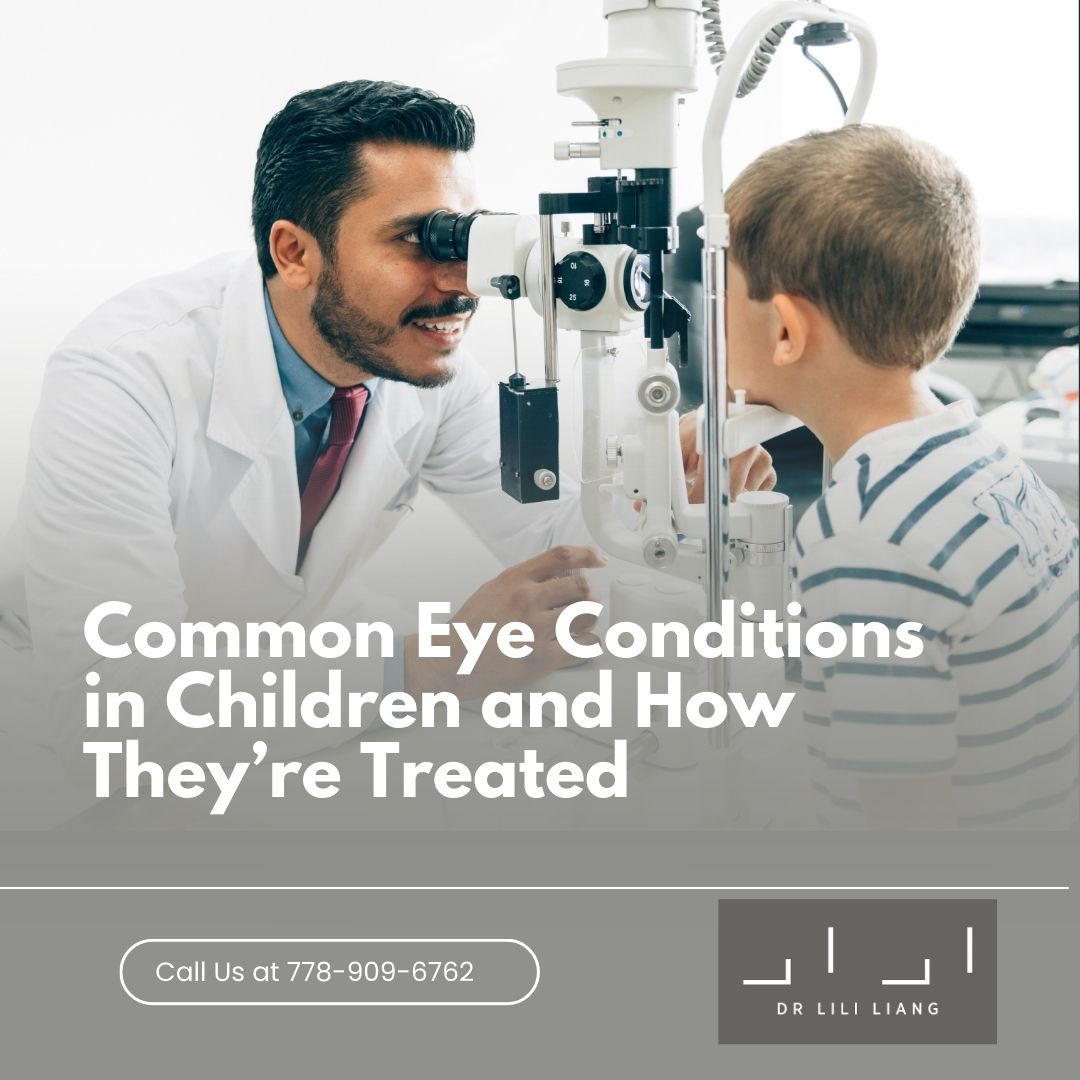
Refractive Errors
Refractive errors are among the most common eye conditions affecting children.
What They Are
These include:
Myopia (nearsightedness) – difficulty seeing distant objects
Hyperopia (farsightedness) – difficulty focusing on close tasks
Astigmatism – blurred or distorted vision at all distances
Treatment
Prescription glasses
Ongoing monitoring to track vision changes
Myopia management strategies when appropriate
Amblyopia (Lazy Eye)
Amblyopia occurs when one eye does not develop normal vision because the brain favors the other eye.
Why It Matters
If left untreated, amblyopia can lead to permanent vision loss in the weaker eye. The American Academy of Ophthalmology notes that early treatment—ideally before age seven—produces the best outcomes.
Treatment Options
Patching the stronger eye
Prescription eye drops
Vision therapy programs
Strabismus (Eye Misalignment)
Strabismus refers to eyes that do not align properly and may turn inward, outward, upward, or downward.
Signs Parents May Notice
Eyes that appear crossed or drifting
Squinting or head tilting
Difficulty with depth perception
Treatment
Corrective glasses
Vision therapy
Surgical correction in some cases
Early care is important, as strabismus can lead to amblyopia if untreated.
Conjunctivitis (Pink Eye)
Conjunctivitis is an inflammation of the eye’s outer membrane and is common in school-aged children.
Causes
Viral infections
Bacterial infections
Allergies
Treatment
Antibiotic drops for bacterial conjunctivitis
Allergy eye drops for allergic reactions
Supportive care for viral cases
Most cases resolve with appropriate treatment and good hygiene practices.
Blocked Tear Ducts in Infants
Blocked tear ducts are common in newborns and infants and often cause excessive tearing or discharge.
Treatment
Gentle massage techniques
Monitoring as many cases resolve naturally
Minor procedures if blockage persists
The Importance of a Pediatric Eye Exam
A comprehensive pediatric eye exam can identify issues that standard vision screenings may miss. These exams evaluate eye health, alignment, focusing ability, and visual development. Parents seeking preventive care or treatment options often benefit from working with an experienced eye care provider who understands children’s unique visual needs.
Families looking for a trusted optometrist in Vancouver can find personalized pediatric eye care through Dr. Lili Liang, whose practice emphasizes early detection, child-friendly exams, and long-term vision health.
When to Schedule a Children’s Eye Exam
Routine eye exams are recommended:
Before starting school
During early school years
Anytime vision concerns arise
Common warning signs include frequent headaches, squinting, poor academic performance, or eye strain. Early diagnosis allows for timely treatment and better outcomes.
Schedule Your Child’s Eye Care with Dr. Lili Liang
Protecting a child’s vision starts with proactive care. Scheduling a comprehensive eye exam ensures potential problems are identified early and treated effectively. Parents are encouraged to book a children’s eye exam with Dr. Lili Liang to support their child’s visual health and overall development.

Contact Information:
Doctor Lili Optometry
Unit 401 – 1338 W Broadway, Vancouver
Vancouver, BC V6H 1H2
Canada
Lili Liang
+1 778-909-6762
https://doctorlili.com/


